“Children are our legacy.”

School Programs

2012/2013

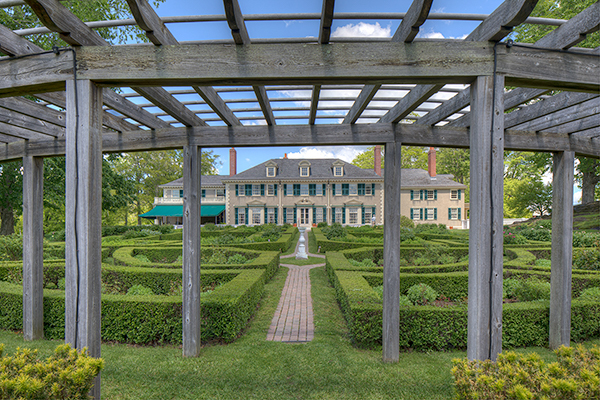
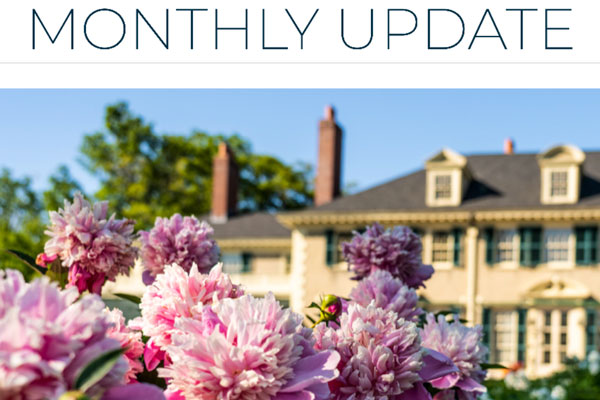
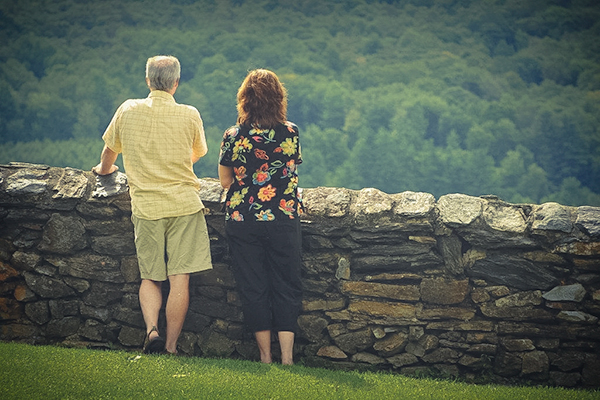
Overlooking the valley of the Battenkill, Hildene is a stately 24-room Georgian Revival mansion that was the summer home of Robert Todd Lincoln, the eldest son of President Abraham Lincoln. Friends of Hildene, a nonprofit, community based organization, was formed in 1975 to save this 412 acre estate from development.

For the first 25 years our education program centered largely on tours of the home and formal gardens. In 2005 we expanded our mission to add new emphasis on education, relevance and commitment to community. Now our programs more fully utilize our entire property, including its wetlands, streams, meadows, forests, pond and vernal pool.

All of our programs support Vermont’s Framework of Standards and Learning Opportunities. They are designed to provide connection to classroom studies and offer hands-on learning experiences for students. Through history and natural science themes, students explore concepts that help cultivate observation and inquiry skills, a sense of wonder, appreciation of the past, and care for planet earth.

NATURAL SCIENCE

Mighty Monarchs Fall • Grades: K-3 • Length: 1 1/2 hours • Outreach Program Option
Monarchs are the only butterflies to migrate north and south each year, yet no single individual completes the round-trip journey. With hands-on activities, students explore the habitat, life-cycle and migration of this magnificent butterfly, including tagging and releasing a monarch before it begins its fall migration to the mountains of Central Mexico. Problem Solving 2.1; Organisms, Evolution and Interdependence 7.13.

The Buzz on Honeybees Fall & Spring • Grades: K-3 • Length: 1 1/2 hours • Outreach Program Option
Who’s who in the hive? How is honey made and flowers pollinated? Students will explore the world of honeybees with investigation, pantomime, and inspection of the bees in our observation hive. With indoor and outdoor activities we’ll examine the bee’s design, life- cycle, social structure and important role as a pollinator, as well as the special arrangement of honeycomb. Organisms, Evolution and Interdependence 7.13; Problem Solving Process 2.2; Analysis 7.11.

Splendid Spiders Fall • Grades: K-3 • Length: 1 hour
In our gardens, forests, fields and homes, spiders can be found, quietly focused on their important ecological role - capturing and eating insects. While these small predators eat tons of pest insects every year, they are opportunistic and will eat almost any insect they can catch. In this program students observe live spiders and build model spiders from their observations, discover the process of spiders capturing prey in a web, and go on a guided hunt in our dairy barn to observe spders, webs and record observations. We will also examine the life cycle and vital ecological role of these terrestrial predators. Organisms, Evolution and Interdependence 7.13; Problem Solving Process 2.2; Analysis 7.11.

Wild & Wary: Vermont’s Turkeys Fall • Grades: 1-4 • Length: 1 1/2 hours
The word turkey is often associated with Thanksgiving feasts. Unlike earlier times, the turkey we enjoy today isn’t a wild bird, but rather farm-raised. While tasty, the domestic turkey is not nearly as fascinating in behavior or development as its wild cousin. With slides, touchable artifacts, and interactive activities, students explore the history, habitat, life-cycle and behavior of Vermont’s wild turkeys. Our inquiry includes activities highlighting the importance of predators in shaping the turkey's behavior and survival strategies. Sustainability 3.9; Historical Connections 6.4; Movements & Settlements 6.8; Organisms, Evolution and Interdependence 7.13.

Beavers: Nature’s Extraordinary Engineers Fall & Spring • Grades: K-3 • Length: 1 3/4 hours • Outreach Program Option
How does a beaver keep its teeth sharp, stand up to cut a tree down or eat under water without drowning? Through an inquiry-based activity students will discover the adaptations beavers have made which enable them to create their own environment. Using slides, the beaver’s behavior, life cycle and habitat will be highlighted. Then students will explore Hildene’s Battenkill wetland to see the impact of these extraordinary landscapers, and will map their observations. Organisms, Evolution and Interdependence, 7.13; Understanding Place, 4.6.

NEW FLOATING BOARDWALK! Pond Discovery Fall & Spring • Grades: 1-4 • Length: 1 1/2 to 2 hours
To discover the remarkable diversity of the pond community, students explore the life in and around Hildene’s pond using nets, magnifiers and field guides. They collect creatures and plants from different pond habitats, make observations about their differences, and identify ways they are adapted to live in a watery world. They also work together to create a pond food web. Problem Solving Process 2.2; Organisms, Evolution, and Interdependence 7.13; Understanding Place 4.6.

Streams: Life Beneath the Flow Fall & Spring • Grades: 2-4 • Length: 2 hours
Students will explore the variety of habitats and interconnected web of animals and plants within a stream. They will catch and identify aquatic insects, build a river food web, and learn how insect life can teach us about a stream’s health. They will also discover important adaptations that are vital for life in these ever-changing ecosystems. Problem Solving Process 2.2; Analysis 7.11; Organisms, Evolution and Interdependence 7.13.

Vernal Pools: Unique Amphibian Nurseries Spring • Grades: 3-5 • Length: 2 hours
Through slides, hands-on investigation and observation of live animals, students will discover the critical support vernal pools provide to certain amphibians. They will examine the energy and nutrient source of these temporary pools, become familiar with some of the “obligate” vernal pool species and learn why these pools are called the “hatchery of the forest.” Problem Solving Process 2.2; Organisms, Evolution and Interdependence, 7.13; Understanding Place 4.6.

Under and Over the Snow Winter • Grades: 1-3 & 4-6 • Length: 2 hours Outreach Program Option
How do animals adapt to Vermont’s long cold winter? Through indoor and outdoor activities, students will examine the survival strategies of animals in winter and learn basic track identification skills. They examine prints and track patterns, make their own tracking guides, learn to move like the mammals do, and practice their tracking skills in the woods nearby. Problem Solving Process 2.2; Organisms, Evolution, and Interdependence 7.13; Understanding Place 4.6.

Goats, Gouda & Gastric Microbes
Spring • Grades: K-1, 2-4 • Length: 1 1/2
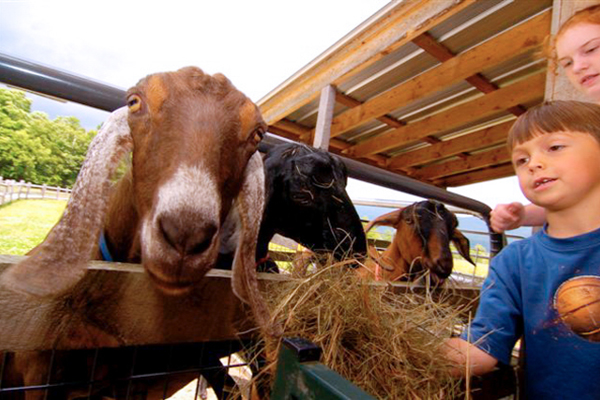
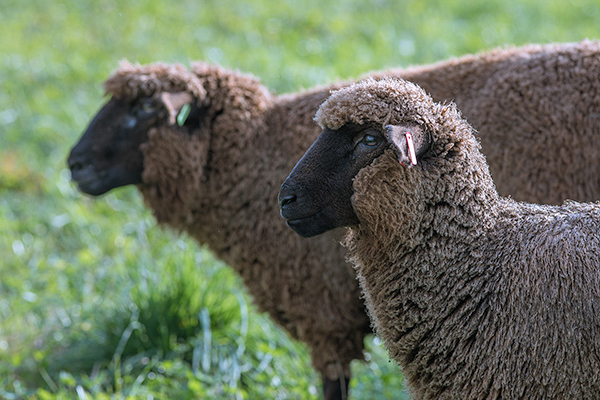
Spend a morning at Hildene’s goat dairy! As students interact with the does and kids, the life cycle, anatomy and care of goats will be examined. Students discover why four-stomached animals like goats have different dietary needs than simple-stomached animals. While learning about the processes of milking and cheese making at the dairy, students will identify goat products and try their hand at milking a goat. Activities are modified for younger students. Understanding Place, 4.6; Sustainability, 3.9; Natural Resources, 7.16.

HISTORY

Pullman Porters: Unsung Heroes Former Slaves, Labor Organizers, Middle Class Citizens & Civil Rights Activists
Fall, Winter & Spring • Grades: 5-6 • Length: 3 hours • $5
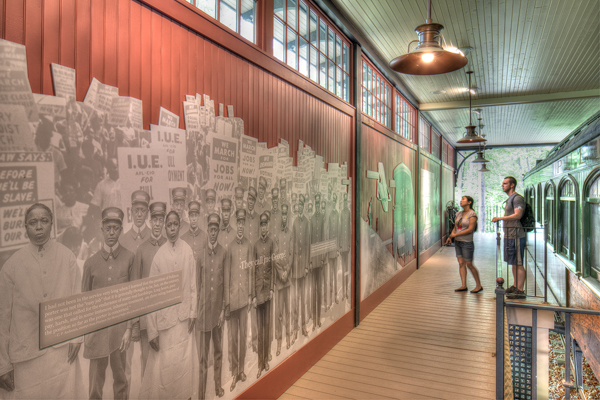
Restored to its former glory, our 1903 wooden Pullman palace car, Sunbeam, provides the setting for students to discover the critical role that Pullman porters played in giving rise to America’s black middle class, the formation of the black labor movement, and the momentum for the civil rights movement.  

Generations of African Americans were impacted, first, by the actions of President Lincoln, the Great Emancipator, and then by his son, Robert Lincoln, a captain of industry, who built Hildene in 1905. This slice of history  – a span of 100 years - beginning with the Emancipation Proclamation and running through the civil rights movement is among the most influential in race relations in the United States.

Students role-play what it was like to travel and work on a Pullman car, use primary sources that relate to the era, learn a civil rights song, construct a timeline illuminating the period’s milestones in African American civil rights, and visit the mansion where Robert Lincoln conducted Pullman business during his time in Vermont. Historical Connections 6.4; Traditional and Social Histories 6.5; Human Rights 6.12; Forces of Unity and Disunity 6.14; Impact of Economic Systems 6.16; Nature of Conflict 6.18.

The Hollow School Fall, Early Winter & Spring • Grades: 1-4 • Length: 1 3/4 hours
Under the guidance of a 19th century schoolteacher, students will learn about going to school over 150 years ago. Our fully restored one-room schoolhouse provides the setting for students to experience the lessons and tasks of children in early Vermont schools. Our “school day” commences when the bell is rung. Role-playing 19th century scholars, students will use reproduction texts, slates and quill pens for their lessons, which incl ude memorization and recitation. They will also play old time games during the recess break. Historical Connections 6.4; Analyzing Knowledge 6.3.

Historic Crafts Fall, Winter & Spring • Grades: 2-5 • Length: 1 1/2 - 2 hours • Outreach Program Option
Today the word “craft” often means making something for pleasure. In early America making crafts was an essential part of everyday life. To help students understand what it was like to live in earlier times, when so many things we take for granted did not exist, they make everyday household items like dipped candles or baskets. Increasing students’ appreciation of the early settler’s self-sufficiency, this hands-on program introduces each craft in an historical context. Choose from the list below the craft(s) you would like to do:
Dipped Candles 1 1/2 hours (2nd - 5th) Cornhusk Dolls 1 1/2 hours (3rd - 5th) Basket Weaving 2 hours (5th grade) Pierced-Tin Candle Shades 1 hour (2nd - 5th) Usually a trade rather than a home craft, tinsmithing was done by a tinker who made everyday items including lanterns, candle moulds and kitchen ware. Historical Connections 6.4; Movements and Settlements 6.8; Impact of Economic Systems 6.16

A Vermont Stoy: The Equinox Guards & Civil War Camp Life Spring • Grades: 4-6 • Length: 1 1/2 hours
This program tells the story of the 87 young men from the Manchester area, the North Shire, who served in the Civil War. Our story, based primarily on soldiers’ letters and newspaper accounts, follows these men from their enlistment and training in 1861, to the Battle at Savage Station in 1862, where many of them were killed, to the reunions held years later. Students role-play actual members of the Equinox Guards.  To illustrate the discipline, hard work and camaraderie of army camp life, students practice roll call, drills, marches and other activities including letter writing, singing, food sampling and sewing. By making connections between family, community, Vermont history, and United States history, this program is a resource for any teacher wishing to augment their Vermont history or Civil War curriculum. Historical Connections 6.4; Forces of Unity and Disunity 6.14; Nature of Conflict 6.18.

The American Ideal: Abraham Lincoln and the Second Inaugural Winter & Spring • Grades 5-12 • Length: 1 hour
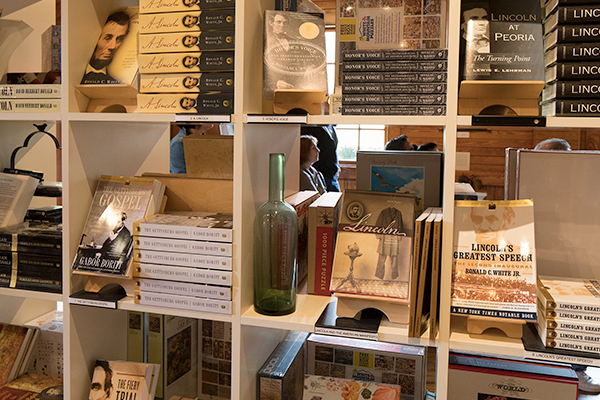
Set within the context of Abraham Lincoln’s Second Inaugural, which harkens back to the then radical beliefs first enunciated in the Declaration of Independence, students learn how the Civil War and President Lincoln helped bring life and meaning to the promise of the American Ideal of equality, justice and opportunity for all. This program is a guided, interactive tour through Hildene’s new Lincoln exhibit. Historical Connections 6.4; Forces of Unity and Disunity; Nature of Conflict 6.18

Window To The Past Fall, Winter & Spring • Grades: 3-12 • Length: 1 1/2 hours
Students take a guided tour of the Hildene mansion beginning with a brief orientation film about the Lincoln family and history of Hildene. During the tour students learn through artifacts in the home a family history that spans from pre Civil War to 1975. Historical Connections 6.4; Eras and Styles 5; Times & Cultures 5.2.

Lincoln and the Telegraph: The Innovator with the Innovation Fall, Winter & Spring • Grades 5-8 • Length: 1 1/2 hours
During his presidency Lincoln revolutionized the use of the telegraph. An innovator at heart, he instinctively recognized the important military value of this new electronic communications tool. Under Lincoln, the War Department installed its first telegraph office. He made daily visits to it and used the telegraph to gather information and to assert his leadership to the front. Prior to Lincoln’s expanded use of the telegraph, rapid exchanges between the Commander in Chief and his generals in the field didn’t occur.
Students learn about the critical role of the telegraph in the Civil War, use telegraphs to send and receive messages that when combined reveal one of Lincoln’s most important decisions and then view related artifacts in our new exhibit, The American Ideal: Abraham Lincoln and the Second Inaugural. Historical Connections 6.4; Forces of Unity and Disunity; Nature of Conflict 6.18


Our mission: Values into Action

1005 Hildene Road Post Office Box 377, Manchester, VT 05254 802 362-1788 www.hildene.org

.


Contact Us

For information call Diane Newton, Education Director, 802-367-7965, or email dianenewton@hildene.org.


Registration Information

Fees: Each school program costs $3 per student. Groups are welcome to participate in more than one program during their visit. One adult chaperone admitted free for every 8 students. Additional adults are $5 each. Exceptions are made for special needs students. Additional travel costs may apply if programs are held at your school.

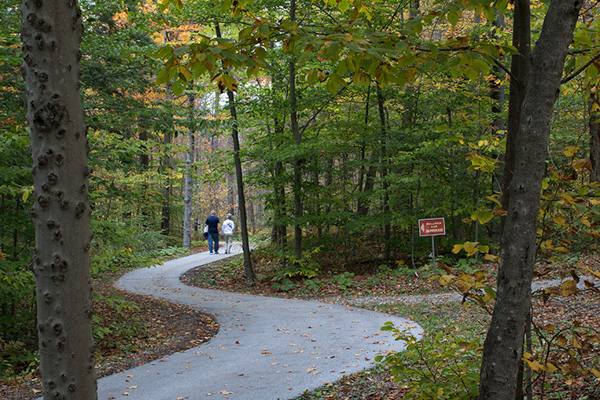
Lunch, Trails & Farm Animals: Groups may enjoy their brown bag lunch in our picnic area and are also welcome to explore our walking trails. Interpretive signs along the Farm Loop trail highlight trees, shrubs, ferns and other natural features. This trail loops through Hildene Farm with our herd of goats and cheesemaking facility.

Vermont Framework of Standards & Learning Opportunities: The specific standards that are addressed are listed after each program.

Outreach Programs may be held at your school.

Photography & Video
You are welcome to take flash-free still photographs of your group’s activities except in the house. Please contact Diane Newton prior to your visit for permission to shoot video.


Museum


Hildene Logo

The Lincoln Family Home

Hildene © 2012  All rights reserved.